


When you plan to move a pet tent from one place to another, foldability and portability become key factors. Not every tent that claims to be portable is easy to carry or quick to set up. Some designs fold into a neat circle, while others require you to collapse a complex frame. Understanding the different folding mechanisms helps you choose a model that fits your travel style.
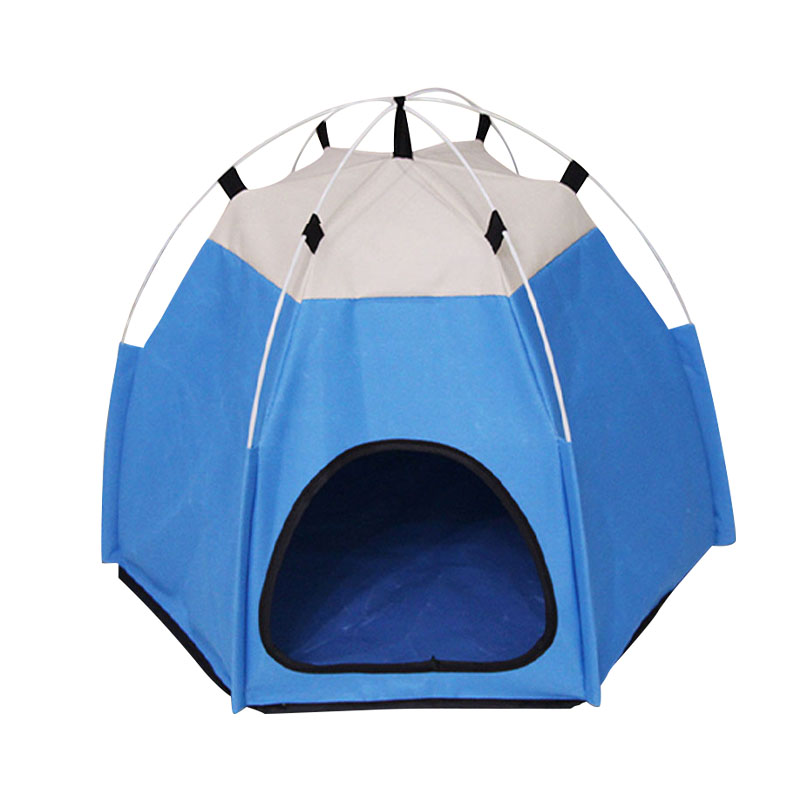
Three Common Folding Mechanisms
Manufacturers use several methods to make tents collapsible. Each has strengths and weaknesses.
Pop‑up (automatic) tents spring open when released from their storage strap. They are very fast to set up – a matter of seconds. Folding them back requires a specific technique: twist the circular frame into three smaller circles. Once you learn the motion, it becomes easy. These tents are great for spontaneous trips.
Folding frame tents work like some camping chairs. The poles are hinged, and the tent folds into a rectangle or square. You unfold the frame like a book, and the fabric stretches into place. These tents are stable and pack into a thin shape that fits under a car seat. They take a little longer to set up than pop‑up models.
Roll‑up tents are the simplest. The poles are separate or attached but not hinged. You slide the poles into sleeves, then roll the whole tent into a cylindrical bag. This type is common for larger tents. It packs small but takes more time to assemble.
What to Look for in a Portable Design
Portability means more than just being able to fold the tent. Check these aspects before buying:
Folded size – A tent that folds into a disk of 40 centimeters across and 5 centimeters thick is easy to store in a backpack. A rectangular fold of 50 by 15 by 15 centimeters also works well. Avoid tents that are still bulky after folding.
Weight – For hiking or walking trips, look for a tent that feels light when you hold it. For car travel, a slightly heavier tent is acceptable, but you will still appreciate a lighter option when moving it from car to campsite.
Carrying case – A good tent comes with a bag that has a shoulder strap or handles. The bag should be slightly larger than the folded tent, so you are not fighting to squeeze it in. Some bags have clips to attach to a backpack.
Ease of folding – Practice folding the tent at home. If it takes more than a minute or two, you may get frustrated on a trip. Pop‑up tents can be tricky at first, but many people learn quickly. Frame tents are usually straightforward.
Balancing Portability with Sturdiness
A very light tent may use thin fabric and delicate poles. While it is easy to carry, it might not hold up to an active dog that paws at the walls. On the other hand, a heavy tent with thick canvas and steel poles is durable but tiring to transport. Look for a middle ground: polyester fabric with a medium denier, and poles made of fiberglass or aluminum. These materials provide reasonable strength without adding too much weight.
Testing for Real‑World Use
Imagine you are on a trip. You arrive at a rest stop and want to let your dog rest in the tent while you eat lunch. Can you set up the tent on a picnic table in under a minute? Can you fold it again without a flat surface? Try these scenarios at home. If the tent passes your test, it is portable enough for your needs.
Special Considerations for Air Travel
If you plan to fly with the tent, check airline rules for pet carriers. Many airlines require that the carrier fit under the seat. A pop‑up tent that folds into a small circle often fits, but you must ensure it can be secured closed during the flight. Some frame tents are too rigid to squeeze into the under‑seat space. For flying, a soft‑sided pop‑up tent is usually a good choice.
Keeping the Tent Clean on the Go
Portability also means you should be able to clean the tent easily after a muddy walk. Look for a model with a removable inner pad that you can wash. The main fabric should be wipeable with a damp cloth. Avoid tents with many nooks and crannies where dirt can hide. A simple design is often more practical than a fancy one.